While picking up trash, one of the first things that struck me about our laneway was the multi-layered ground, with heavy bluestone pavers covered in bitumen. Melburnians know and love bluestone. It’s hard to imagine any council sending out their asphalt foremen to re-surface one of our inner-city bluestone laneways today. It’s a celebrated part of our urban heritage and many of our iconic buildings are clad in it, from The National Gallery of Victoria to the Pentridge Prison. It is believed that Ned Kelly, the infamous bushranger, worked as a labourer at a bluestone quarry nearby here in the inner west.


Bluestone got its mainstream popularity around the time of the great Australian gold-rush, when Melbourne’s population boomed and the city had to expand rapidly to keep up. As a building material bluestone was strong, and in strong supply; the city was built on one of the largest volcanic basalt plains in the world. Indigenous Australians had been using bluestone for over 6600 years, which we can see evidence of at Lake Condah—about 320km west of Melbourne—in the sophisticated stone-walled eel-trap systems, built by the Gunditjmara people to ensure year-round supply of eels as a food source. Bluestone was used by the settlers to resemble the cobbles of English streets. In the Victorian era they would have sent the nightsoil carts down these bluestone back laneways to pick up the crap (literally) from the rear of the properties.
In the lead up to the 1956 Olympic Games many of the city’s bluestone laneways were covered with bitumen. The bluestone pitches, laid using a hammer and chisel, would have been fairly expensive to maintain—not to mention bumpy to cycle over and tricky to walk on in high-heels. Some of these laneways have been rebuilt by the city, the asphalt cleaned off and the original bluestones relayed where possible with others brought in as required. Our laneway mustn’t have qualified for that type of restoration. I’m actually not sure if any in this area would have unfortunately.
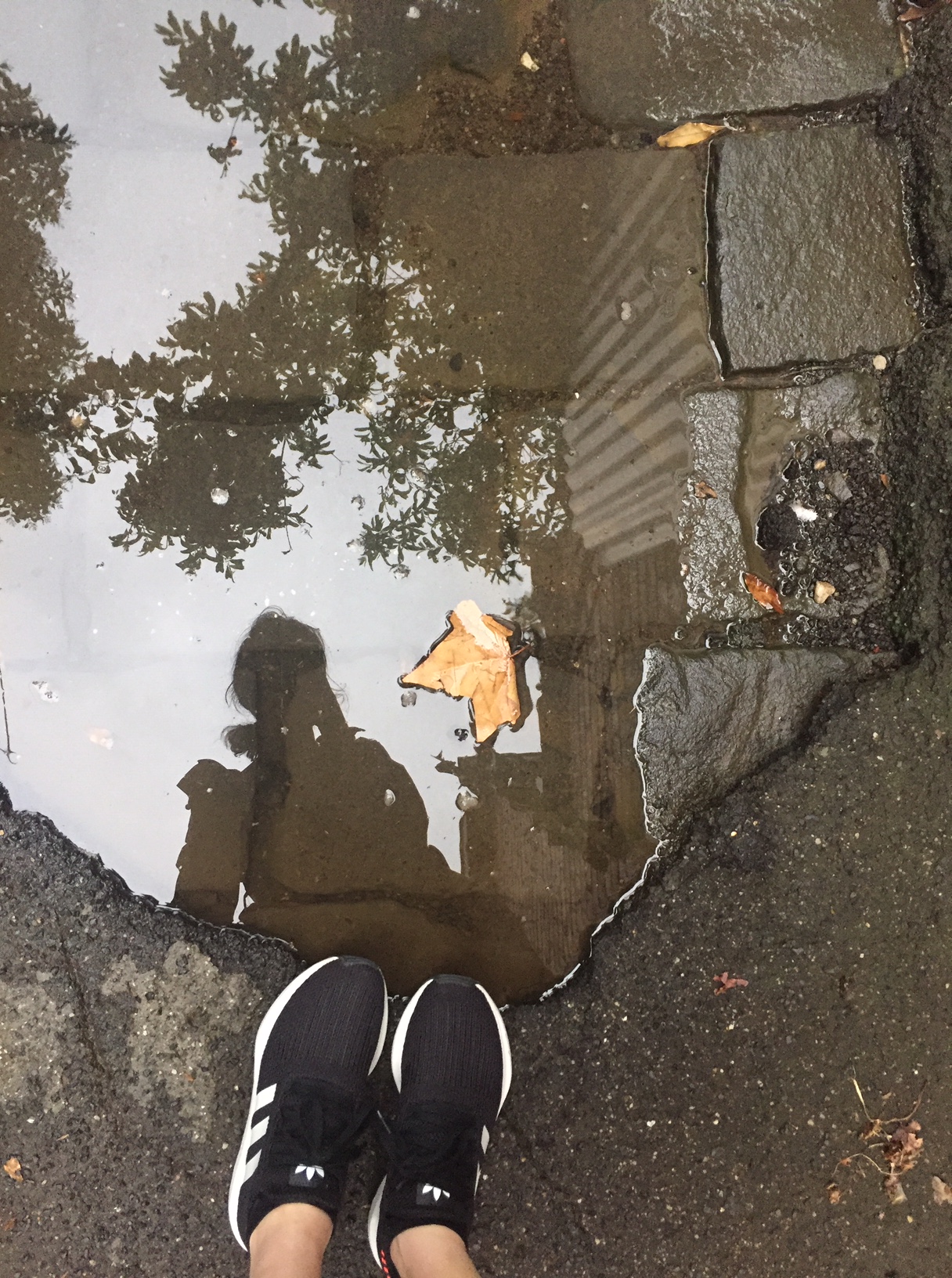
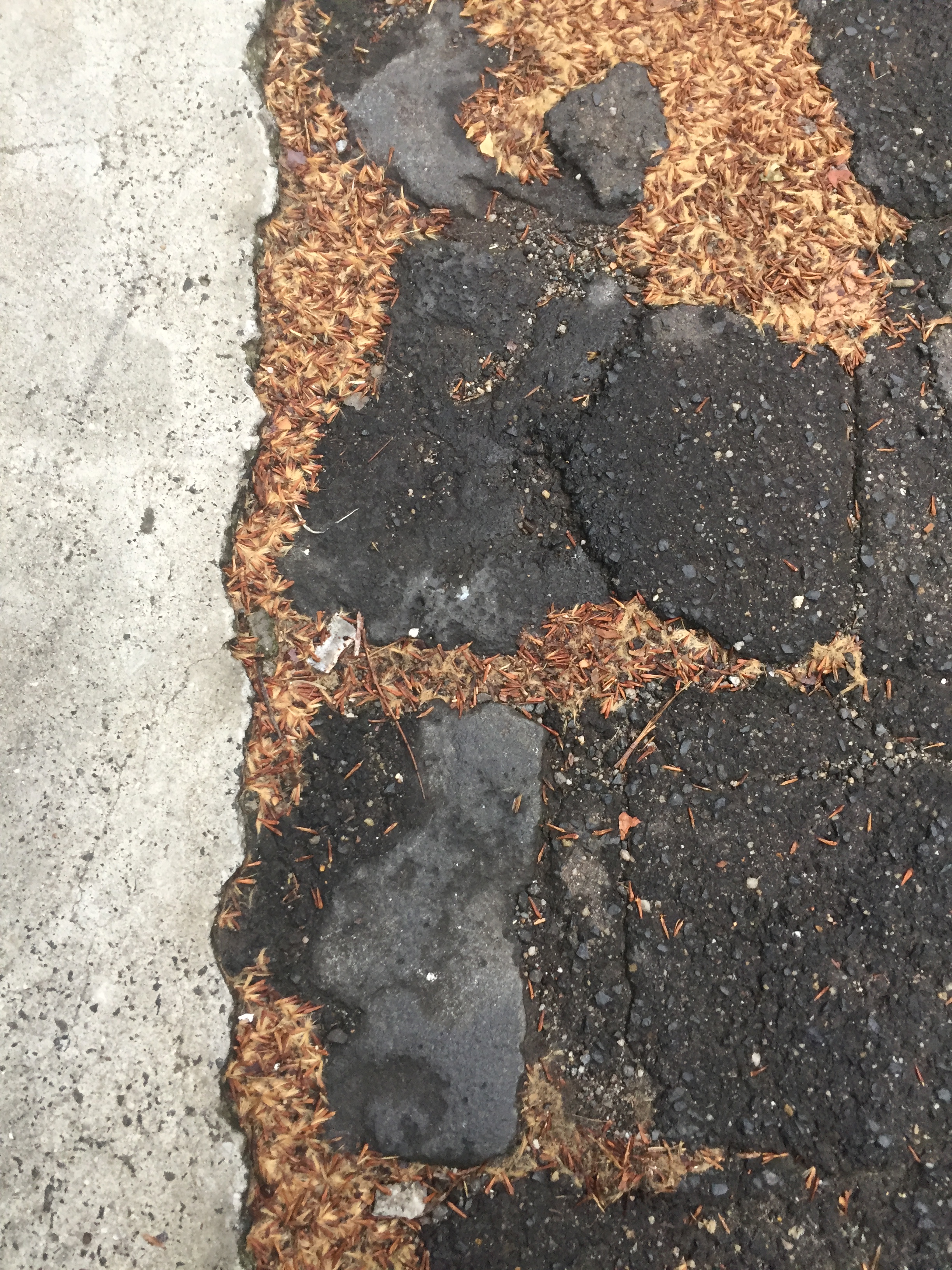
It’s quite beautiful to see bluestone making an appearance in our laneway. Not to be forgotten, it peeks out from crevices along fence-lines, in brick like patterns. It’s visible in large patches where the asphalt has been completely worn away by delivery vehicles. In other areas, there are cracks emerging in the bitumen in the shape of its cobbles: markings that tell us about a history that lies just below the surface. This morning it was raining and water has pooled in the laneway’s deeper ditches. The bluestone glistens from deep within the puddles and leaves both float and reflect on top.
Further (Holiday) Reading
Museum’s Victoria Collections, Bluestone Paving at the Newmarket Saleyards
Just down the road from here, Australia’s largest outdoor saleyard was paved in bluestone in 1858. The gaps in the bluestone offered automatic drainage for the cattle’s excrement and provided a nice surface for their hooves to grip.
A really interesting article by Ian J. McNiven, Professor of Indigenous Archaeology at Monash University, about how the Gunditjmara have successfully overturned traditional representations of their people as simple hunter-gatherers. The stone traps and channels are presented as an example of Aboriginal environmental management that blurs the distinction between foragers and farmers.
Bluestone and the City: Writing an Emotional History, Stephanie Trigg
Stephanie Trigg, Humanities Researcher at The University of Melbourne, writes about Melbourne’s passionate relationship with bluestone. She also has a wonderful blog to chart daily encounters, images, thoughts and feelings about volcanic basalt/bluestone in Melbourne and Victoria.



 The Laneway Project
You must be logged in to post a comment.